
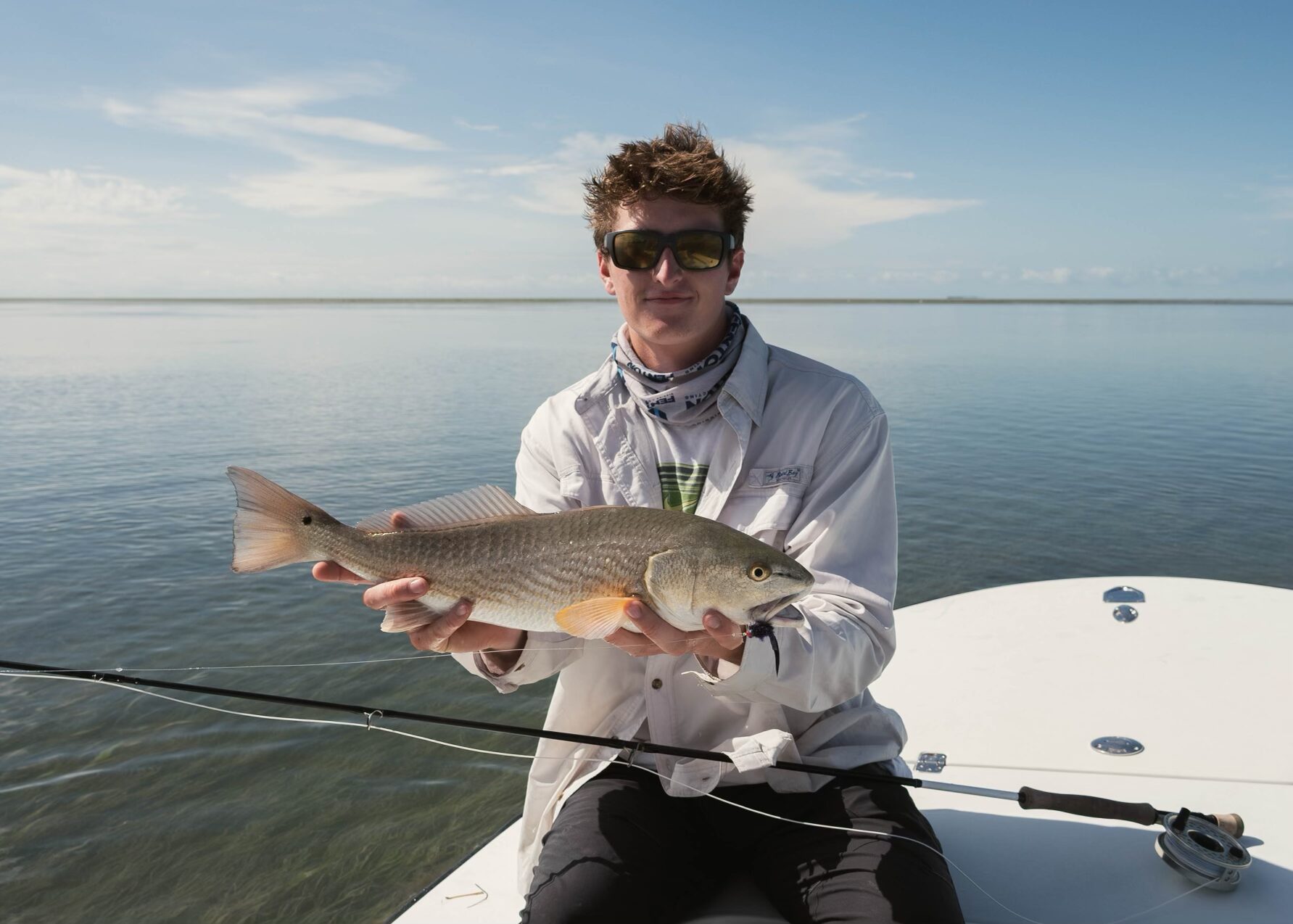

Most trophy fish in the Florida Keys are lost long before the angler ever makes a cast. They aren’t lost to a broken knot or a bad hook-set; they are lost to poor fly line management. In the chaos of a tangled deck, a snagged fly, or a loop around the reel handle that stops your line cold, you’ll be left watching that fish of a lifetime swim away. In the high-stakes environment of fly fishing from a skiff, your ability to manage your line is every bit as important as your casting ability.
Keeping a Clear Deck
The deck of a poling skiff is essentially a minefield of cleats, rod holders, cooler latches, and loose gear. To ensure your line flies through the guides without a hitch:
- Strip Early: Before stepping onto the bow, strip your entire fly line off the reel. Lay it in the boat—not in a random pile, but in a structured “nest.” Ensure the line closest to the rod tip is on top so it doesn’t cross over the other coils during your shot.
- The Pre-Cast Check: Every 15 minutes, perform a quick line check. Reach down and give your line a light shake to ensure it hasn’t looped around a cleat or tucked under your sneaker. A line that is clear is a line that will help you land the fish of a lifetime. Sometimes, the wind can case an issue in your stacked line.
Mastering the Stripping Bucket in the Wind
On a breezy Florida day, a loose fly line on the deck is a recipe for disaster. The wind will catch your slack, blowing it across the boat, around your legs, or worse—into the water behind you. This is where a stripping bucket (or stripping basket) becomes your most valuable piece of equipment.
- Positioning: Mount or place the bucket so it sits at a comfortable waist or hip height. It should be positioned to allow for a smooth, unimpeded strip while you watch for fish.
- The Bucket Technique: When stacking your line in the stripping bucket, use a consistent, deliberate motion to coil the line. The key is the order of operations: stack your running line first, and finish by coiling your shooting head (the thickest part of the line) on top. Think of it as ‘first in, last out.’ Because the shooting head is now the top layer, it will be the first to fly through the guides when you cast. This prevents the fly line from tangling or dragging across the underlying coils during your shot. By keeping the entire length of your line contained within the walls of the bucket, you effectively wind-proof your setup; even in 15–20 mph gusts, your line stays secure and tangle-free, ensuring you are always ready for that split-second opportunity.
- The Bucket’s Line Clearing Advantage: When it’s time to shoot your line, the coils in the bucket will feed out through the guides effortlessly. Because the bucket keeps the line from ever touching the deck, you eliminate 99% of the snags that typically plague skiff anglers on windy days.
The Memory Factor
Finally, remember that your fly line is a tool that requires maintenance. Stretch your line thoroughly before the start of every trip. A line with memory (coils remaining from being stored on the reel) is a line that will inevitably tangle. A straight, stretched, and clean line is a line that will give you the confidence to make the shot when the guide calls out, “Fish at 10 o’clock!”


Leave a Reply
You must be logged in to post a comment.