Fly fishing Islamorada should be on any angler’s bucket list. IBut even in the Sport Fishing Capital of the World, the fish don’t look at a calendar—they look at the thermometer and the tides.
To land a Florida Keys Bonefish, Tarpon, or Permit, you need to know when the windows of opportunity are at their highest for each species. If you want a Grand Slam, then you’ll need to pick a time when each species is available to fly fishermen.
1. The Silver King: Spring Tarpon Migration
Peak Months: mid-April through June
When the water temperature hits a consistent 75°F, the “Silver King” arrives in force. This is the Super Bowl of fly fishing. Thousands of migratory Tarpon (70 to 150+ lbs) push along the oceanside flats and through the bridge channels.
- The Experience: You are hunting “strings” of fish. Your guide will position the skiff to intercept them as they swim toward you.
- The Challenge: It’s a game of nerves. You need to lead a 100-pound prehistoric fish by six feet, retrieve the fly properly and time your strip set perfectly.
- Pro Tip: Book May or June for the most fish, but be prepared for crowds. If you want a quieter experience, try the “backcountry” of Florida Bay in late March.
2. The Black-Tailed Devil: Summer Permit
Peak Months: June through September
While Permit can be caught year-round, the hot, slick-calm days of summer are arguably the best time to find them tailing on the flats. Once the madness of the Tarpon migration subsides in July, the flats get quiet, and the Permit move in.
- The Experience: Sight fishing at its most technical. You’re looking for the distinct “black spike” of a tail breaking the surface in shallow water.
- The Strategy: Accuracy is everything. The fly must land softly and look like a crab scurrying for cover.
- The Bonus: Summer also brings “schoolie” Bonefish in high numbers, making it the best time for a Grand Slam attempt.
3. The Grey Ghost: Spring, Summer, and Fall
Peak Months: March-November
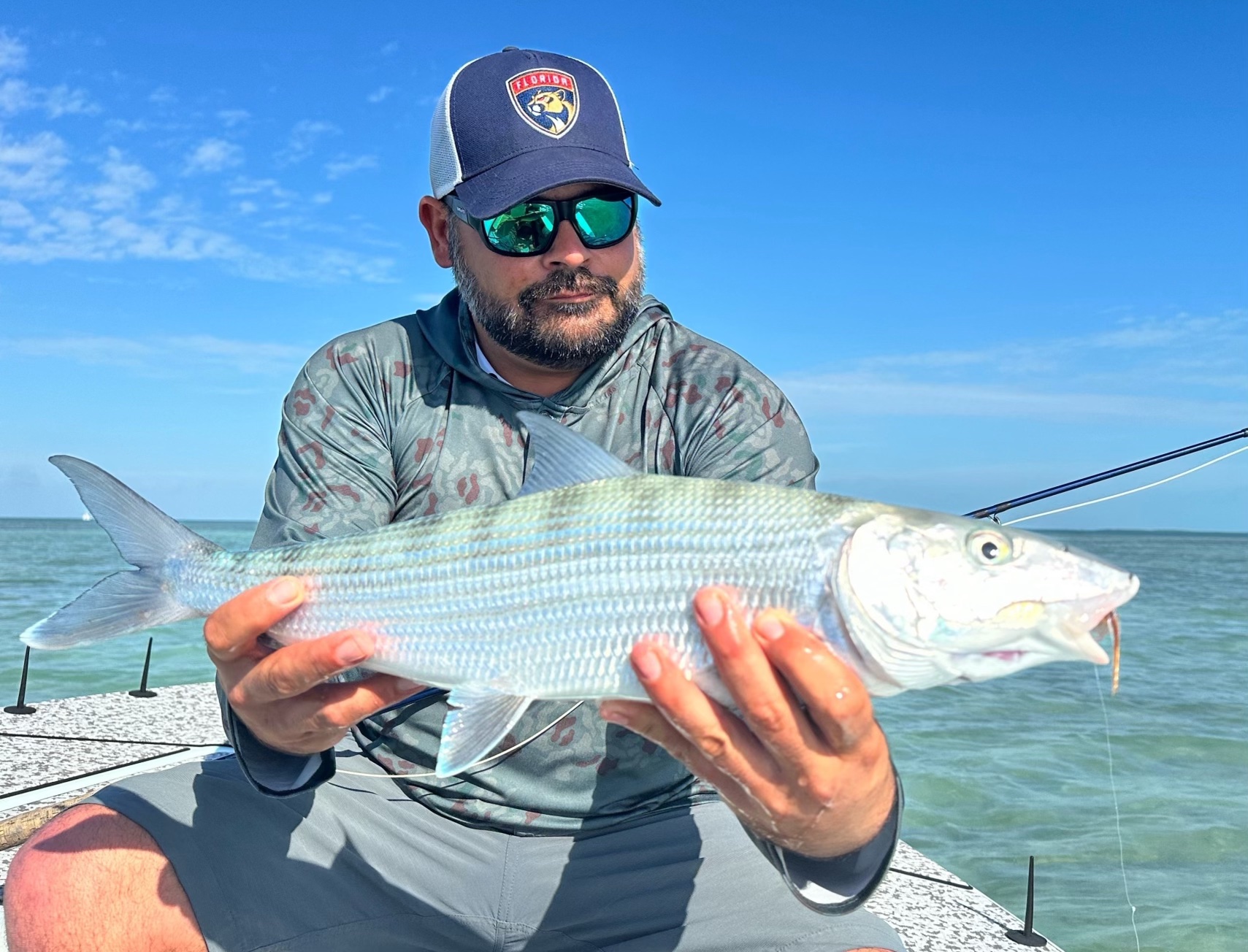
Islamorada is famous for having the largest Bonefish in the world. Unlike the smaller “schoolies” in the Bahamas, we can see these “Grey Ghosts” exceed 10 lbs.
- The Spring-Summer(March-August): As the water temperatures start to warm, the bonefish make their way back onto the flats. The fish are coming back in from their spawn, and are ready to eat.
- The Fall Window (Sep–Nov): This is “Trophy Season.” As the water cools from the summer heat, the biggest Bonefish return to the shallowest flats to feed aggressively before winter.
- The Winter Hunt (Dec–Feb): This is technical fly fishing. The water is gin-clear. On calm, sunny days between cold fronts, Bonefish will “crawl” onto the flats to sun themselves.
- The Difference: In the spring/summer, you’re looking for numbers. In the winter, you’re hunting a ghost. You might only get five shots a day, but one of them could be a double-digit fish.
So When Should You Go Fly Fishing in Islamorada?
- For the Bucket List: Visit in May. You’ll have the best shot at a massive Tarpon and plenty of Permit action.
- For the Technical Angler: Visit in November. The crowds are gone, the weather is gorgeous, and the trophy Bonefish are hungry.
- For the “Slam” Chaser: Visit in July. The winds are low, the Tarpon are still around, and the Permit/Bonefish activity is at its peak.

Leave a Reply
You must be logged in to post a comment.