While the “Big Three” of the Florida Keys—Bonefish, Tarpon, and Permit—rightfully command the spotlight on the open ocean flats, true local legends know that the most exhilarating action is often tucked away in the shadows of the backcountry. Here, in the labyrinthine mangrove islands of Everglades National Park and the expansive, tea-colored basins of Florida Bay, exists the Everglades Grand Slam: Snook, Redfish, and Tarpon.
Why the Backcountry Slam is a Local Favorite
The open ocean flats are a game of patience, high-stakes sight fishing, and nerves of steel. The Everglades backcountry, by contrast, is a game of aggression, precision, and raw intensity.
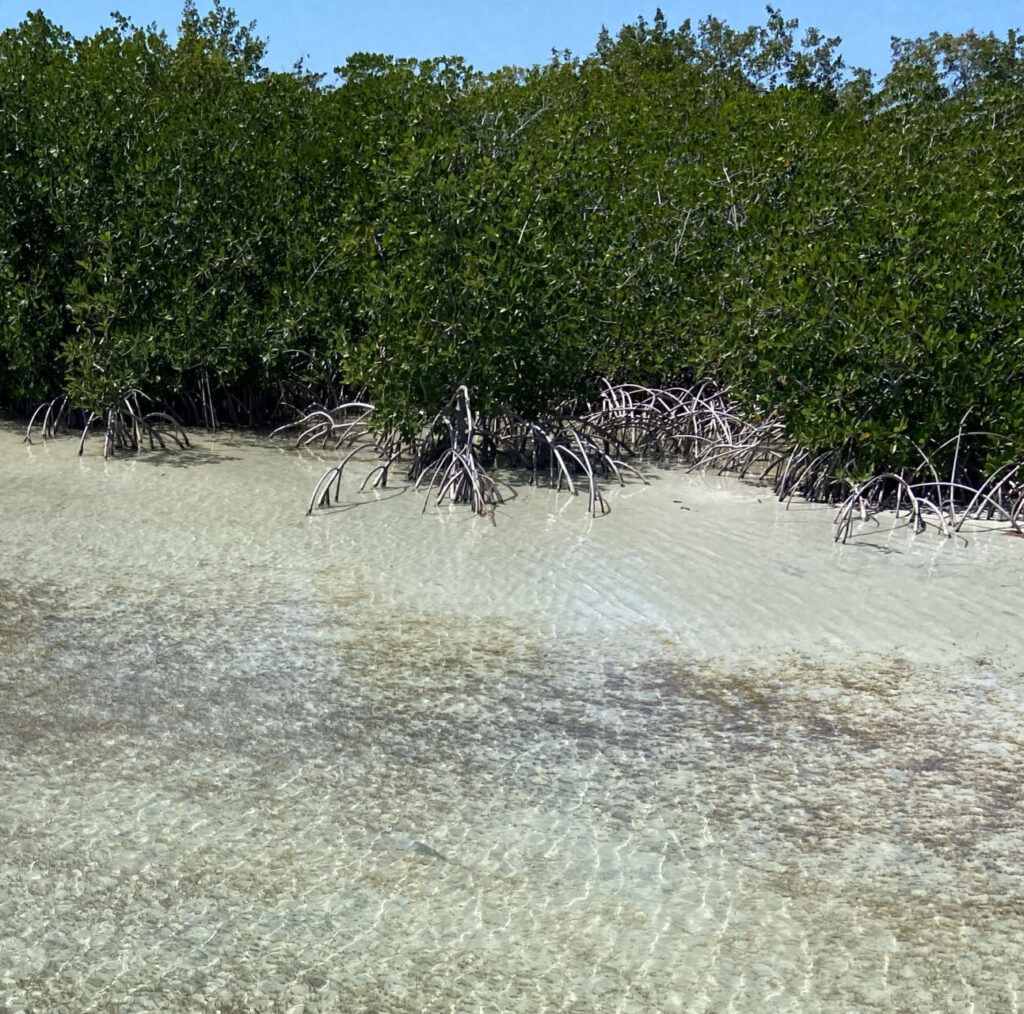
When you leave the clear, blue water of the Keys and enter the park, you’re trading distance for structure. You are fishing the edges—the specific zones where the dense mangrove roots meet the water. In these tight quarters, sight fishing becomes a sudden, reactive discipline. You aren’t just watching a fish tail; you are watching a Snook or Redfish ambush your fly with explosive violence.
The Players: Anatomy of an Aggressive Eat
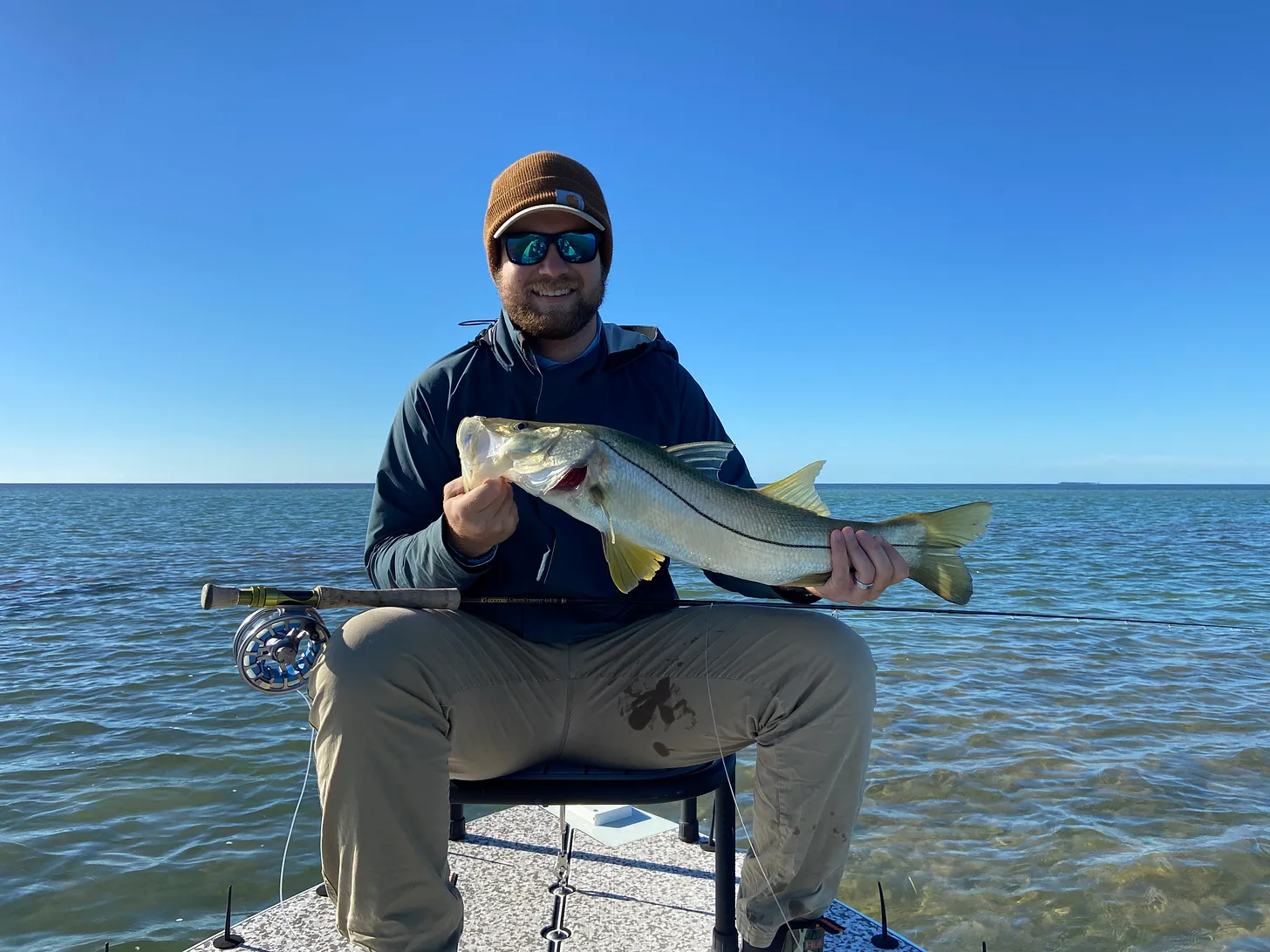
- Snook (The Ambush Specialist): Snook are ambush masters. They hold tight to the deepest recesses of the mangrove roots, waiting for a baitfish to pass within inches. A cast that lands two feet from the roots is often ignored; a cast that lands perfectly against the wood is often met with a crushing, immediate eat.
- Redfish (The Tailing Target): Redfish are the pride of the shallow mudflats. Watching a copper-colored tail break the surface is one of the most exciting visuals in fly fishing. They are systematic foragers, rooting through the mud for crabs and shrimp, making them a fantastic target for a well-placed fly.
- Tarpon (The Resident Backcountry King): While the migratory Silver Kings steal the show in the spring, the backcountry holds a healthy population of resident Tarpon year-round. These fish are smaller, scrappier, and perfectly acclimated to the swamp, making them the ultimate final piece of your Slam.
Best Time of Year per Species
Timing your trip to the Everglades requires an understanding of water temperatures and migratory patterns:
- Spring (March–May): This is undeniably the peak of the Slam. As the water warms, the migratory Tarpon begin to filter into the park, and the Snook and Redfish become incredibly active. If you want the highest probability of checking off all three species in a single day, this is your window.
- Fall (September–November): This is the “Secret Season.” As the intense heat of the summer begins to break, the resident Snook and Redfish feed with incredible aggression to bulk up for the winter. The boat traffic is minimal, and the backcountry is pristine. It’s the perfect time for an angler who values solitude and aggressive eats over the spring crowds.
An Unforgettable Experience
Fly fishing the Everglades isn’t just about the catch; it’s about the environment. You’ll be poling through quiet creeks, past sunning alligators and soaring ospreys, in a wilderness that feels thousands of miles away from civilization. It is rugged, beautiful, and deeply rewarding. If you want a trip that pushes your casting precision to the limit while delivering some of the most violent eats in the sport, the Everglades Grand Slam is the ultimate challenge.

Leave a Reply
You must be logged in to post a comment.